The State Apartments

The State Apartments

Scroll Down for an Online Tour

The Grand Staircase

This grand imperial staircase was the first of its type in Dublin and was created in 1749. Its generous architectural form created a suitably imposing first impression of the State Apartments. During the social season, debutantes and members of the aristocracy ascended this staircase in court dress on their way to attend balls, dinners and presentation ceremonies given by the Viceroy. Since 1938, it has been part of the main ceremonial route used during the inauguration of the President of Ireland in the State Apartments.
Battleaxe Landing, Dublin Castle

Battleaxe Landing, Dublin Castle, Davison & Associates
The State Apartments, Dublin Castle

The State Apartments, Dublin Castle. Mark Reddy Trinity Digital Studios. Office of Public Works.
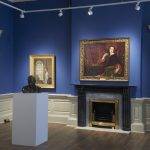
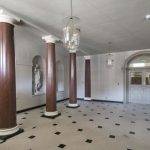
Entrance Hall, Dublin Castle

Entrance Hall, Dublin Castle, Davison & Associates
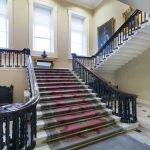
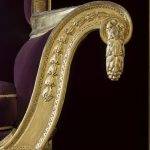
Detail, Grand Staircase, Dublin Castle

Detail, Grand Staircase, Dublin Castle, Davison & Associates
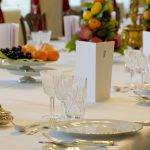
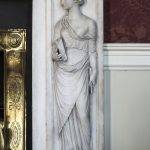
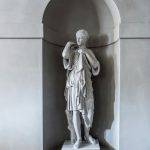
Artemis, Dublin Castle

Artemis, Dublin Castle, Davison & Associates
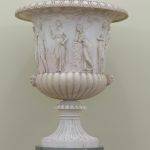
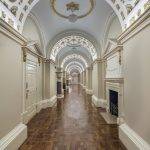
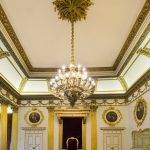
The State Corridor

This great neoclassical corridor was designed in 1758. It provided access to formal State reception rooms, the Viceroy's quarters, and the Privy Council Chamber. The Privy Council Chamber was the setting for the handover of Dublin Castle from the last Viceroy to Michael Collins and the new government of the Irish Free State on January 16, 1922.

State Corridor, Dublin Castle

State Corridor, Dublin Castle, Davison & Associates
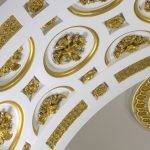
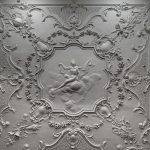
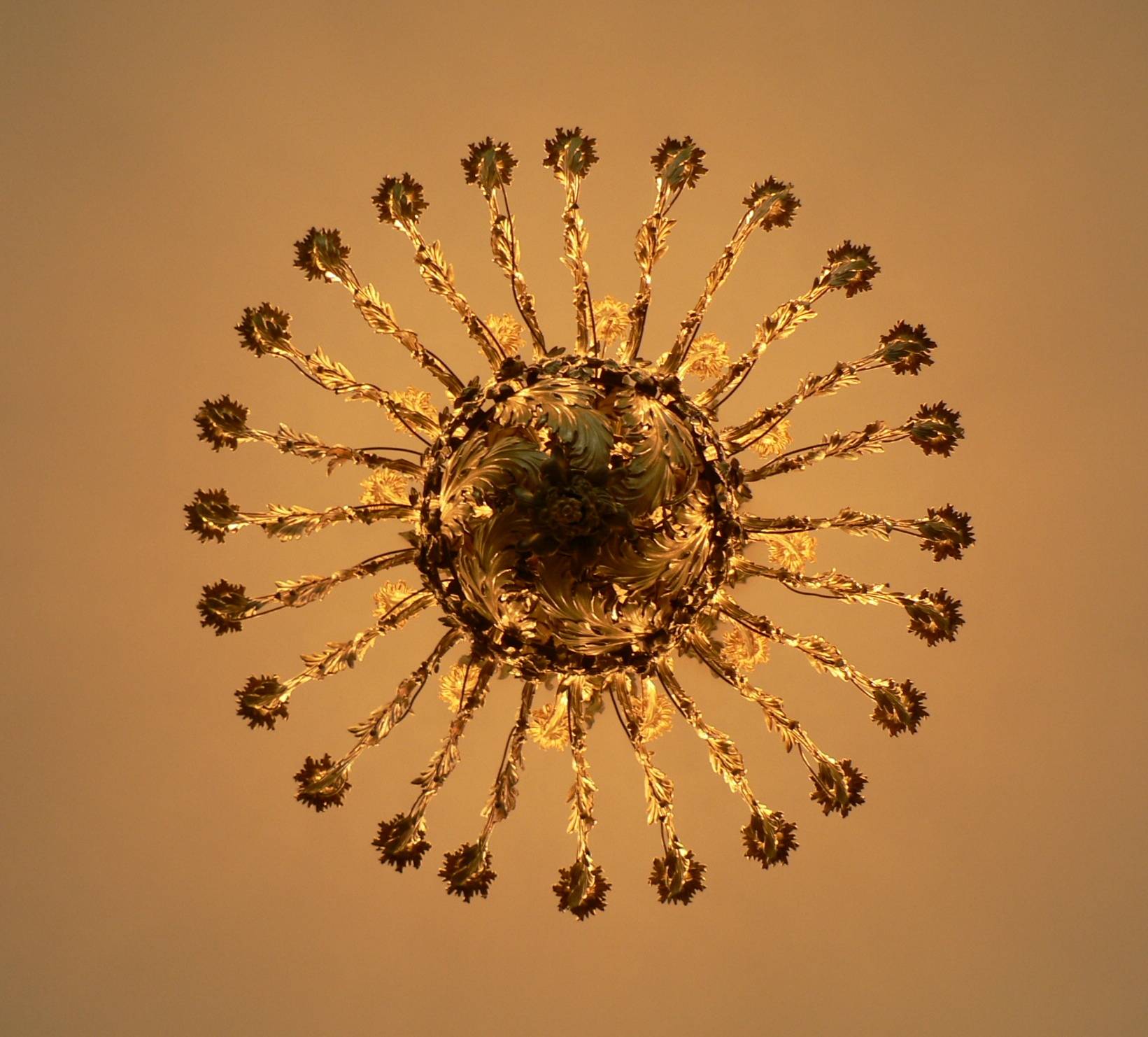
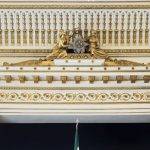
The State Corridor. Ornate gilt ceiling

The State Corridor. Ornate gilt ceiling.

The State Apartments, Dublin Castle

The State Apartments, Dublin Castle. Mark Reddy Trinity Digital Studios. Office of Public Works.

The State Apartments Galleries

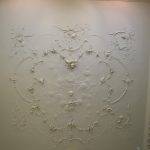
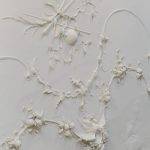
These four rooms were originally the quarters of the Viceroy and his family, including the State Bedchamber, the Viceroy's Study, the Viceroy's Dressing Room, and the Vicereine's Boudoir. Two rooms feature exquisite rococo plasterwork ceilings dating from the 1750s by the renowned stuccodore Bartholomew Cramillion. Today the rooms are used as gallery spaces for a vibrant programme of exhibitions, many of which explore themes relating to the Castle's history.

The State Apartments, Dublin Castle

The State Apartments, Dublin Castle. Davison and Associates. Office of Public Works.

The State Apartments, Dublin Castle

The State Apartments, Dublin Castle. Mark Reddy Trinity Digital Studios. Office of Public Works.

The State Apartments, Dublin Castle

The State Apartments, Dublin Castle. Mark Reddy Trinity Digital Studios. Office of Public Works.

The State Apartments, Dublin Castle

The State Apartments, Dublin Castle. Davison and Associates. Office of Public Works.

The State Apartments, Dublin Castle

The State Apartments, Dublin Castle. Davison and Associates. Office of Public Works.

The State Apartments, Dublin Castle

The State Apartments, Dublin Castle. Mark Reddy Trinity Digital Studios. Office of Public Works.

The James Connolly Room

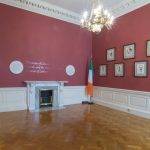
The James Connolly Room is an important landmark in the story of the Easter Rising of 1916. The room was once part of the Viceroy's quarters. In 1915 this room, together with the rest of the State Apartments, became a Red Cross Hospital for soldiers wounded in World War I. It was here, in 1916, that James Connolly was treated for the injuries he had sustained in leading a rebellion against British rule in Ireland. Known as the Easter Rising, the rebellion resulted in the execution of the rebel leaders. On 12 May 1916, James Connolly was brought from here to be executed at Kilmainham Gaol.

The James Connolly Room, Dublin Castle

The James Connolly Room, Dublin Castle. Mark Reddy Trinity Digital Studios. Office of Public Works.

The James Connolly Room, Dublin Castle

The James Connolly Room, Dublin Castle. Mark Reddy Trinity Digital Studios. Office of Public Works.

The James Connolly Room, Dublin Castle

The James Connolly Room, Dublin Castle. Mark Reddy Trinity Digital Studios. Office of Public Works.

The Apollo Room

The Apollo Room derives its name from the figure of the mythological Greek god of the arts and music, Apollo, at the centre of its plasterwork ceiling. Having been rescued from a nearby Georgian townhouse in 1912, this room was installed in the State Apartments in the 1960s during an ambitious restoration project. Inscribed with the date 1746, the ceiling arrived at Dublin Castle in eleven separate pieces that were seamlessly reunited to form a superb example of eighteenth-century craftsmanship.

The Apollo Room, plasterwork ceiling

The Apollo Room, plasterwork ceiling.

The Apollo Room, Dublin Castle

The Apollo Room, Dublin Castle. Mark Reddy Digital Studios. Office of Public Works.

The Apollo Room, Dublin Castle

The Apollo Room, Dublin Castle. Mark Reddy Trinity Digital Studios. Office of Public Works.

The State Drawing Room

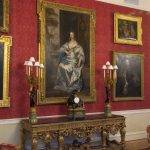
The State Drawing Room was created in 1838. It was primarily used by successive Vicereines (wives of Viceroys) as a formal sitting room and for holding audiences with Irish courtiers. Queen Alexandra and Queen Mary received guests there during royal visits in 1907 and 1911. Today, the room houses one of the most significant paintings in the Dublin Castle collection, a late portrait by Sir Anthony Van Dyck, a leading European portrait painter of the seventeenth century. The room is still used by the President of Ireland for the reception of visiting dignitaries.

State Drawing Room, Dublin Castle

State Drawing Room, Dublin Castle, Davison & Associates
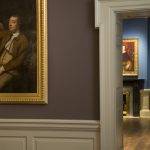
State Drawing Room with bust of Philippe II, duc d'Orléans

State Drawing Room with bust of Philippe II, duc d'Orléans. Dublin Castle. Mark Reddy Trinity Digital Studios. Office of Public Works.

The State Drawing Room, Dublin Castle

The State Drawing Room, Dublin Castle. Mark Reddy Trinity Digital Studios. Office of Public Works.

Portrait of Queen Victoria

Portrait of Queen Victoria by John Partridge, State Drawing Room, Dublin Castle, Davison & Associates
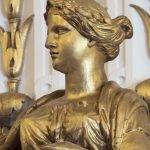
The State Drawing Room

The State Drawing Room, exhibiting a selection of portrait oil paintings.

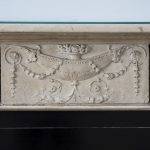
Chimneypiece in the State Drawing Room

Chimneypiece in the State Drawing Room, Dublin Castle, Davison & Associates
The Throne Room

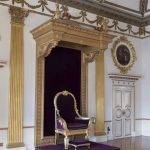
The Throne Room was once the epicentre of royal ceremony in Ireland. It was created in 1788 as an audience chamber in which the Viceroy received guests on behalf of the British monarch. It was also where young debutantes were presented at court to mark their formal entry into aristocratic society. The throne was made for the visit to Ireland of King George IV, in 1821. It was later used by Queen Victoria and King Edward VII during their visits to the Castle. The last monarch to use it before Irish independence was King George V, in 1911. On display over the doors in this space are six important mythological paintings by the Italian artist Gaetano Gandolfi, painted in 1767.

Throne detail, Throne Room, Dublin Castle

Throne detail, Throne Room, Dublin Castle, Davison & Associates
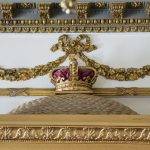
Canopy detail, Throne Room, Dublin Castle

Canopy detail, Throne Room, Dublin Castle, Davison & Associates
Gandolfi Painting, Throne Room, Dublin Castle

Gandolfi Painting, Throne Room, Dublin Castle, Davison & Associates
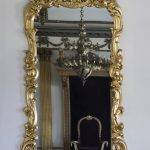
Mirror, Throne Room, Dublin Castle

Mirror, Throne Room, Dublin Castle, Davison & Associates
The Throne Room, Dublin Castle

The Throne Room, Dublin Castle. Mark Reddy Trinity Digital Studios. Office of Public Works.

Throne, Dublin Castle

Throne, Dublin Castle, Davison & Associates
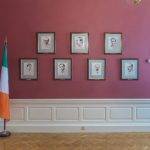
The Portrait Gallery

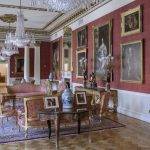
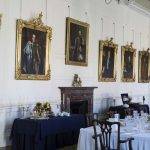
This room takes its name from the collection of portraits of Irish Viceroys that have hung on its walls since 1849. The room's main function was as a dining room where State dinners were held. In the early eighteenth century, expensive and exotic foods such as anchovies, mangoes, caviar and orange blossom water were served here, reflecting the wealth and status of the Viceroy and his court. The room continues to be used for State receptions by the Irish government today. The dining table is laid with Waterford crystal and the Irish State dinner service, which features the national emblem, the gold harp.

Portrait Gallery, Dublin Castle

Portrait Gallery, Dublin Castle, Davison & Associates
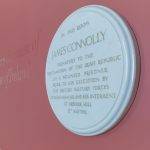
Portrait Gallery, Dublin Castle

Portrait Gallery, Dublin Castle, Davison & Associates
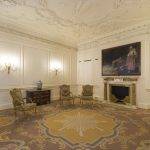
The Portrait Gallery, Dublin Castle

The Portrait Gallery, Dublin Castle. Mark Reddy Trinity Digital Studios. Office of Public Works.

Portrait Gallery, Dublin Castle

Portrait Gallery, Dublin Castle, Davison & Associates
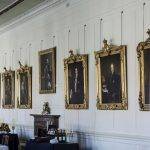
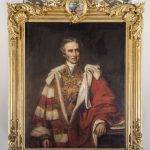
Earl de Grey, Dublin Castle

Earl de Grey, Dublin Castle, Davison & Associates
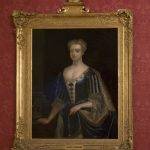
The Portrait Gallery, Dublin Castle

The Portrait Gallery, Dublin Castle. Mark Reddy Trinity Digital Studios. Office of Public Works.

The Wedgwood Room

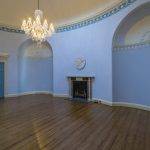
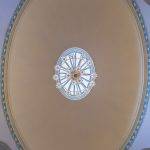
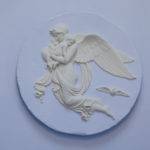
The Wedgwood Room takes its name from the blue and white decorative scheme that recalls the colours of Wedgwood pottery. It was completed in 1777 in the neoclassical style and later became the Castle's billiard room. Lit only from above by a small glass-domed roof, it was a favourite place for the creation of temporary indoor gardens filled with exotic birds, trees and water fountains in the nineteenth century. These installations provided cooling refreshment for guests at the Castle's crowded State balls and receptions.

Wedgwood Room, Dublin Castle

Wedgwood Room, Dublin Castle, Davison & Associates
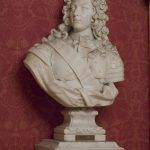
The Wedgwood Room, Dublin Castle

The Wedgwood Room, Dublin Castle. Mark Reddy Trinity Digital Studios. Office of Public Works.

The Wedgwood Room, Dublin Castle

The Wedgwood Room, Dublin Castle. Mark Reddy Trinity Digital Studios. Office of Public Works.

Wedgwood mould of Bertel Thorvaldsen's 'La Nuit'

Wedgwood mould of Bertel Thorvaldsen's 'La Nuit'

Wedgwood Room, Dublin Castle

Wedgwood Room, Dublin Castle, Davison & Associates
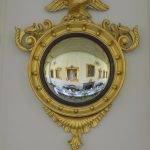
The Gothic Room

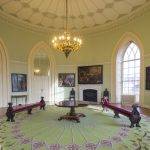
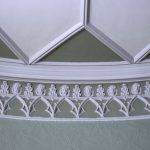
The circular Gothic Room was created as a supper room in 1775 during the reconstruction of the medieval Bermingham Tower. The room's location directly above the State kitchen made it a convenient place for holding private dinners and serving refreshments during balls. With its pointed arches and Gothic forms, it is architecturally significant as the earliest example of the Gothic Revival style in a State building in Ireland. On display in this room is a remarkable collection of sixteenth-century religious and mythological paintings on loan from the Schorr Collection.

Ceiling detail, Gothic Room, Dublin Castle

Ceiling detail, Gothic Room, Dublin Castle, Davison & Associates
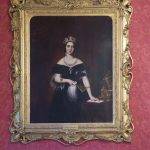
The Gothic Room, Dublin Castle

The Gothic Room, Dublin Castle. Mark Reddy Trinity Digital Studios. Office of Public Works.

The Gothic Room, Dublin Castle

The Gothic Room, Dublin Castle. Mark Reddy Trinity Digital Studios. Office of Public Works.

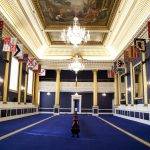
St Patrick's Hall

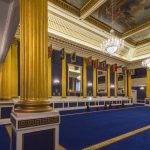
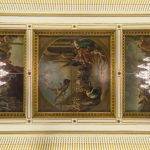
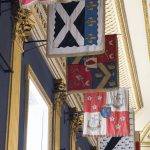
St Patrick's Hall is one of Ireland's greatest ceremonial rooms. It was developed in the mid-eighteenth century as the Castle's ballroom. In 1788, the Italian artist Vincenzo Waldré began work on the painted ceiling that survives today as the most important scheme of its type in Ireland. The hall was for many years the meeting place of the Knights of St Patrick, Ireland's chivalric order of knights whose flags still adorn its walls. Over the years it has been used to entertain some of Ireland's most prominent State visitors including John F. Kennedy, Princess Grace of Monaco and Queen Elizabeth II. Since 1938 it has been the setting for the State's most significant ceremonial occasion, the inauguration of the President of Ireland.

Detail, St Patrick's Hall, Dublin Castle

Detail, St Patrick's Hall, Dublin Castle, Davison & Associates
Banners, St Patrick's Hall, Dublin Castle

Banners, St Patrick's Hall, Dublin Castle, Davison & Associates
St Patrick's Hall, Dublin Castle

St Patrick's Hall, Dublin Castle. Mark Reddy Trinity Digital Studios. Office of Public Works.

Detail, St Patrick's Hall, Dublin Castle

Detail, St Patrick's Hall, Dublin Castle, Davison & Associates
St Patrick's Hall, Dublin Castle
St Patrick's Hall, Dublin Castle. Mark Reddy Trinity Digital Studios. Office of Public Works.

St Patrick's Hall, Dublin Castle

St Patrick's Hall, Dublin Castle. Harry Reid. Office of Public Works.